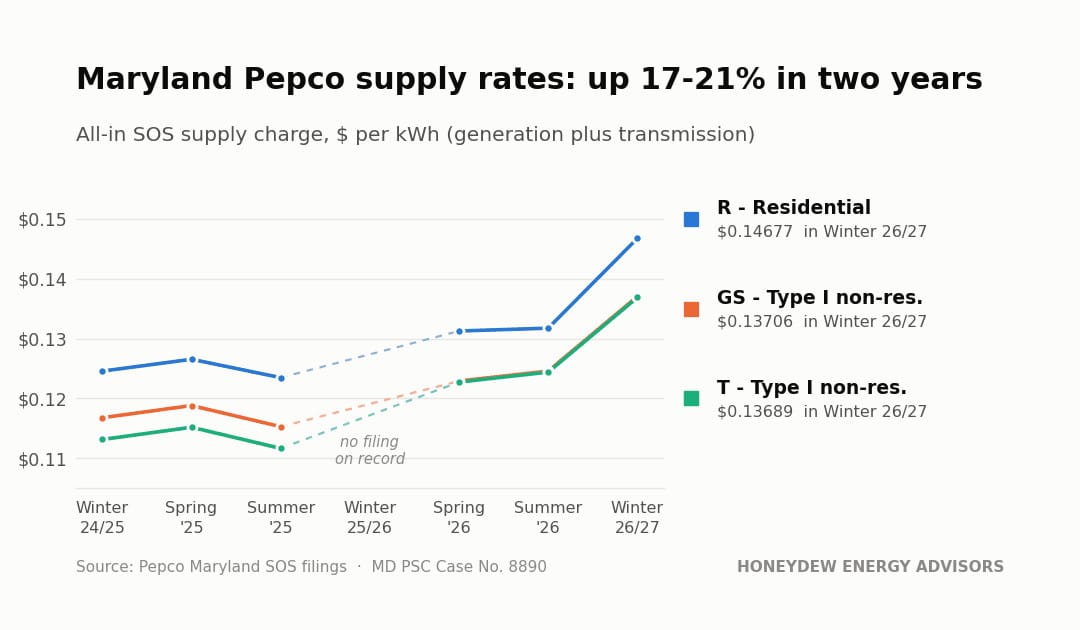
If you are a Pepco customer in Maryland, the steady climb in your electricity bill hasn’t let up. Pepco has filed two rounds of Maryland tariff changes this cycle. Case No. 8890 raises the Transmission Service Charge across every rate class, effective September...
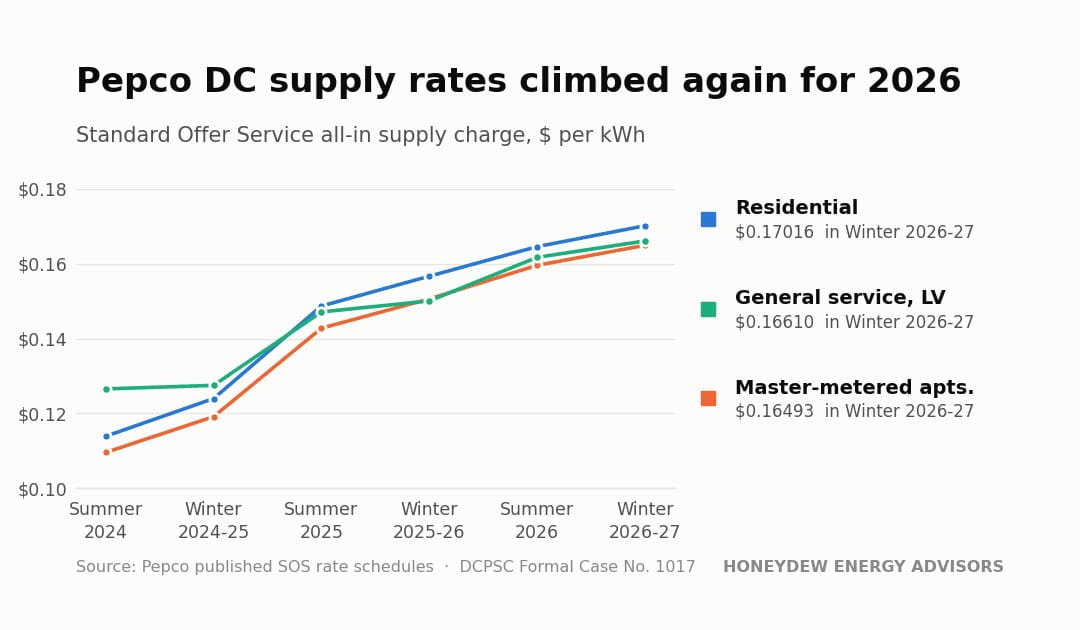
If you are a Pepco customer in the District of Columbia, the steady climb in your electricity bill since the pandemic is not over. On May 20, 2026, the Public Service Commission of the District of Columbia (DCPSC) approved another round of Standard Offer Service (SOS)...
5 things every condo and co-op board must do before December 31. The December 31, 2026 deadline for DC’s BEPS Cycle 1 is coming faster than most boards realize. Whether your building is close to compliant or well below the target, there are specific actions you...
If you’re a condo or co-op board, here’s what you need to know. 2026 is the year DC’s Building Energy Performance Standards (BEPS) goes from something you heard about at a board meeting to something that actually affects your building. This is the...
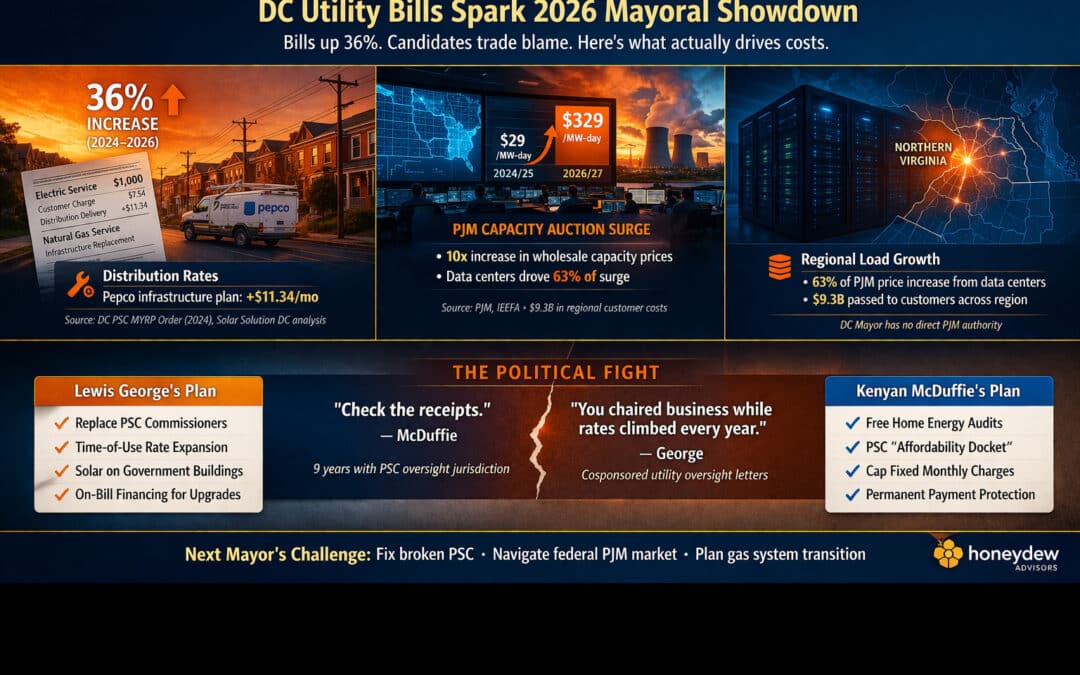
Electric and gas bills in Washington DC have become the defining affordability issue of the 2026 mayoral race, and the candidates are debating them fiercely. The only problem: most of the conversation has been more about blame than about policy, and the technical...
If you follow natural gas markets, you know prices never move for just one reason. Since the US and its allies launched military operations against Iran in early 2026, energy analysts, traders, and building owners have all been asking the same question: is this going...